Homework help · November 13, 2026
How to help with reading homework without reading it for your child
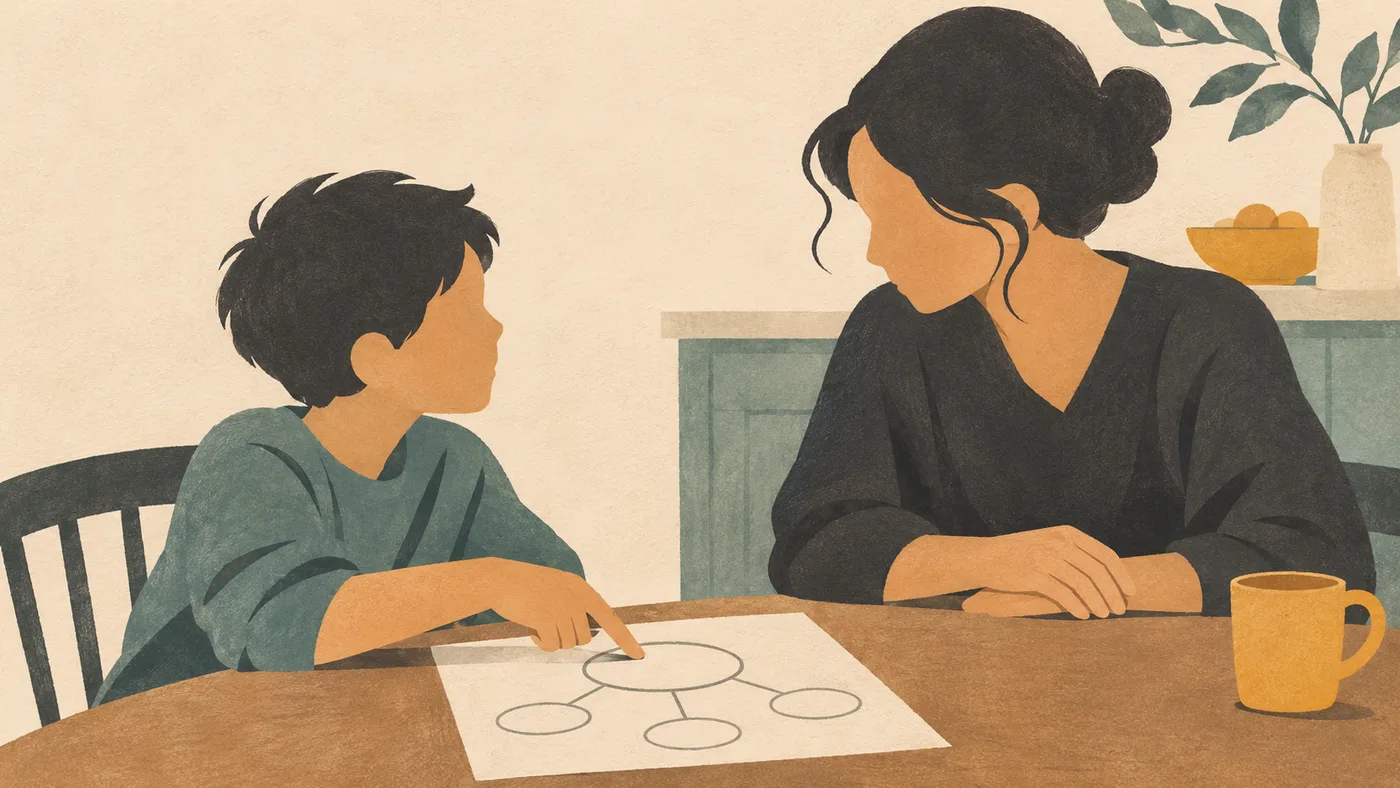
Your child can tell you why a puddle dried up. But the directions on the science worksheet are a long block of text, and they’re still trying to figure out what to do. If you read the directions aloud, are you helping them get started or doing part of the homework for them?
It depends on what the assignment is asking them to practice. On a science worksheet, reading the directions aloud may give your child a way to show what they know. On a phonics worksheet, saying the words your child is supposed to sound out takes away the part they’re meant to practice.
First, find out what the homework is asking your child to do
- If the goal is sounding out words or practicing oral reading: Let your child read the target words or passage, using the cues their teacher has taught. You can help them find the right place on the page or read the directions if the teacher allows it. If they’re stuck on nearly every word, tell the teacher where it got hard instead of trying to finish the page for them. The What Works Clearinghouse guide to early reading explains why children need practice connecting sounds to letters and working out written words.
- If the goal is learning the material or explaining an idea: When the teacher allows read-aloud support, you can read the directions or the relevant part of the passage, or let your child listen to it. Your child still figures out what the question means, finds the information, and decides what to say.
- If it’s a mix: Your child might be asked to read a short passage aloud and then explain it. Let them read the assigned passage themselves for the word-reading part. Ask the teacher whether they can listen to it again before answering the questions. If you can’t tell which parts should be done without audio, ask before changing how your child completes them.
Try this with one question
- Find the starting spot together. Ask, “Where do you think this page wants you to start?” If there are boxes, pictures, and arrows everywhere, point to the first question or put a small sticky note beside it. Leave the rest of the page available so your child can return to a picture or diagram.
- Give the smallest bit of help that gets them started. You might read just the directions, help them find the paragraph, or show them how to replay one section. Ask, “What’s this asking you to do?” If they’re unsure, go back to the instruction together before offering an answer.
- Hand the thinking back. If the question asks why a puddle got smaller, try, “Which sentence or picture could help you explain that?” Give them time to find the clue and say the answer in their own words. If saying it is easier than writing it, let them rehearse it aloud before they write.
- Let your child choose what happens next. Ask, “Want to try the next one on your own, listen to the directions, or have me help you find the right spot?” Needing the same support again is fine. The useful step is learning what help to ask for and how to use it.
Try read-aloud support without changing the assignment
A person or a text-to-speech tool can do the reading aloud. For selectable text on an iPad, Apple’s Speak Selection guide shows how to select a short piece of text and hear it spoken. If the worksheet is a photo or a scan and you can’t select the words, ask for a digital copy with selectable text, or read the relevant section yourself if allowed. Let your child decide when to pause or replay.
A research review on text-to-speech and related read-aloud tools found an average benefit for reading comprehension among students with reading difficulties. That’s a reason to try the support when it fits the task, not a promise it will help every child or a reason to replace word-reading practice.
What to ask the teacher
If the same sticking point keeps coming up, send one concrete example:
My child knew how to answer the science question once I read the directions aloud. Is it okay to read the directions or use text-to-speech for this kind of assignment? Which parts, if any, should they read without audio?
Start with one question tonight. If your child can take the next step after you read the directions or point them to the right box, you’ve helped them get into the work while leaving the thinking to them.